Trump’s second border wall could wipe out three species found nowhere else but Quitobaquito
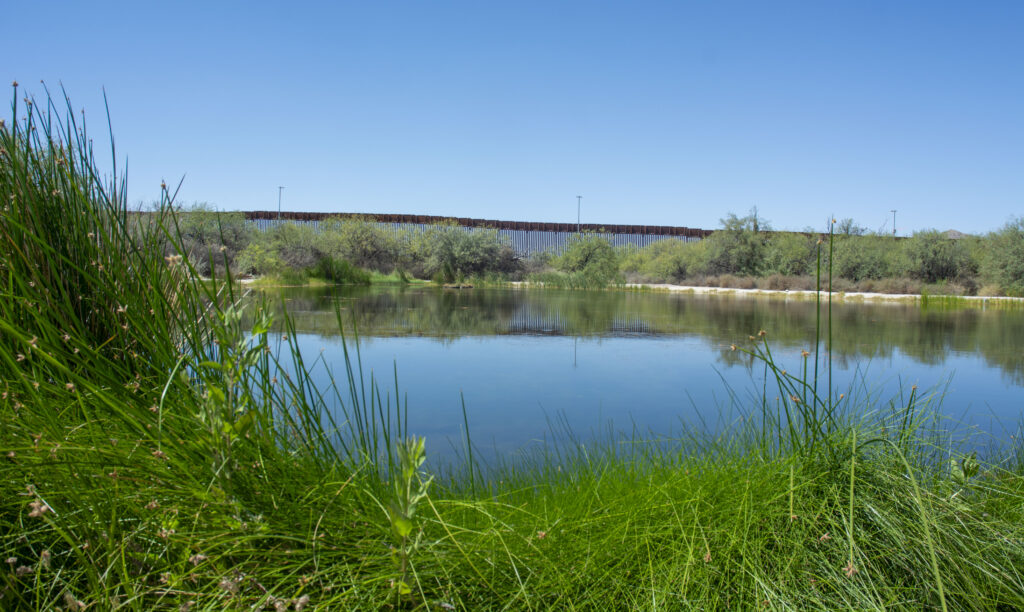
The pond at Quitobaquito Springs, where multiple endangered species live, sits only a couple hundred feet away from the United States border with Mexico. (Photo by Jerod MacDonald-Evoy/Arizona Mirror)
The tranquil waters of Quitobaquito Springs sit in the shadow of the wall separating the U.S. from Mexico that spans much of Arizona’s southern border. The small spring is home to three species that exist nowhere else in the world.
But Quitobaquito Springs, also called A’al Waipai by the Hia-Ced O’odham people, could be destroyed by the Trump administration’s full-steam-ahead project to build a second border wall. And that could wipe those animals off the face of the earth.
“This is literally the last place on Earth that species is found in its natural habitat,” Michael Bogan, an associate professor at the School of Natural Resources and the Environment at the University of Arizona told the Mirror about the Sonoyta pupfish.
The fish used to also exist in Mexico, but climate change and degradation of its habitat by human activity has eradicated those habitats, leaving Quitobaquito as the only place it can now be found.
“So, the pupfish is now extinct in the wild in Mexico, and now Quitobaquito is the last place it persists in the wild,” Bogan said.
Likewise, the Sonoyta Mud Turtle, which is on the endangered species list, and the Quitobaquito springsnail both are only found in the tiny spring.
With the recent destruction of a 1,000-year-old geoglyph in Arizona’s Cabeza Prieta National Wildlife Refuge due to construction for the proposed secondary border wall, conservationists and biologists are preparing for a worst case scenario at Quitobaquito.
“We’re talking about anything from not having to rescue any turtles from having to rescue and find homes for up to 250 turtles,” Bogan said.
Turtles, pupfish and snails
The naturally occurring springs have existed in the desert region for thousands of years. They’ve been an oasis for migratory birds that often find themselves stopping at the spring to rest up and rehydrate amid the intense dry heat of the Sonoran desert.
The spring isn’t just a haven for local wildlife, though. It has long been a sacred site for the Hia-Ced O’odham people, as well as a source of water and a place of burial for the people who have called the region home long-before European settlers arrived.
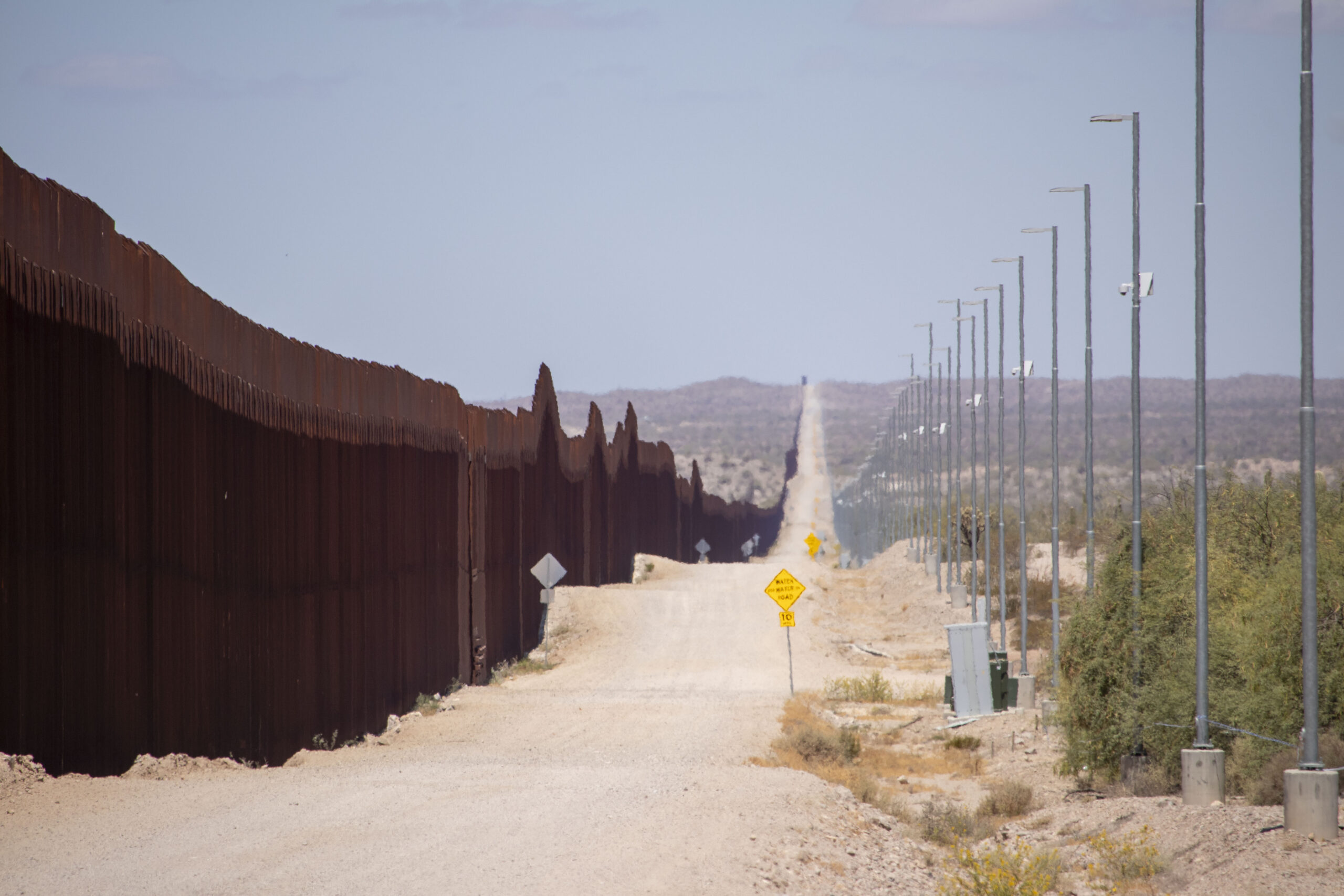
The rust-colored border wall constructed by President Donald Trump in his first term looms nearby, visible from just about anywhere you stand at the pond.
Inside the pond’s clear water are small pupfish, swimming in small schools among the moss.
In the channel leading to the pond, a careful examination will reveal poppy-seed-sized dots moving ever so slightly. They are Quitoboquito tryonia, also known as the Quitobaquito springsnail.
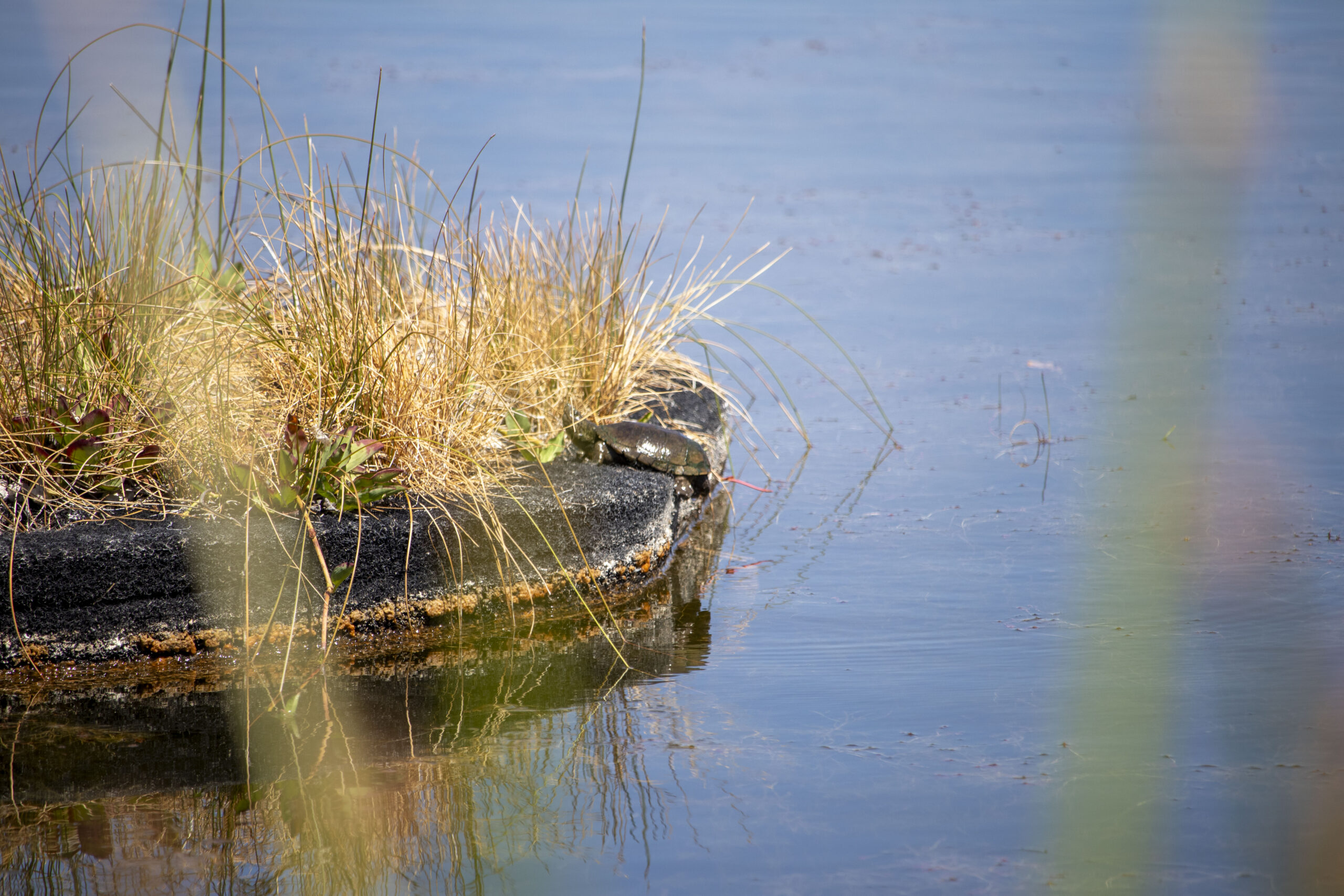
And if you stand very still and peer out across the pond, you may be lucky enough to see a Sonoyta mud turtle pop its head out or lay on one of the man-made islands in the pond for a quick sun break before plopping down into the water.
While Quitobaquito is the only place in the world where these species exist in the wild, people are working to ensure that if Quitobaquito is destroyed that they won’t disappear forever.
“The size of three parking spaces”
The Phoenix Zoo has been at the forefront of trying to ensure that the Sonoyta pupfish and Quitobaquito springsnail don’t disappear off the face of the planet, breeding the animals in captivity to try to ensure there is a “backup population” should things go wrong.
“If you were to take all the habitat on Earth that they were found in, you could fit all of it into an area the size of three parking spaces,” Tara Harris, director of conservation and science at the Phoenix Zoo, told the Mirror about the springsnail. “You can just imagine how vulnerable that feels.”
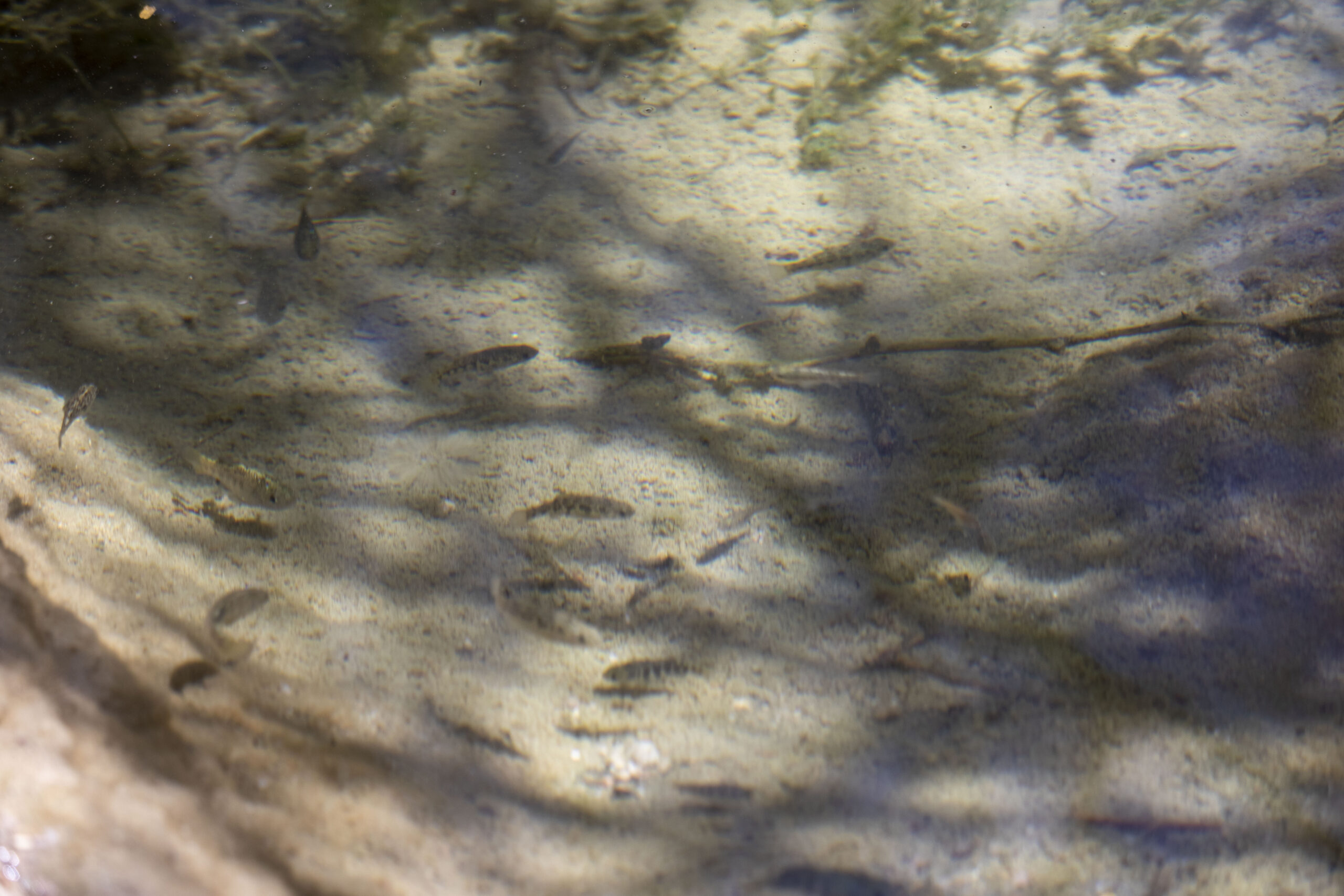
All three species that exist only in Quitobaquito Springs are what is called “endemic,” meaning that they are specific to a particular geographic area or region.
And Quitobaquito Springs is unique in that it is home to a trio of endemic species.
“It is a testament of the isolation factor of the oasis as well,” Kinley Ragan, the Phoenix Zoo’s field research project manager, told the Mirror. “It is in the middle of the Sonoran Desert, and it’s truly an oasis in that sense.”
But while the Phoenix Zoo has been working on efforts to create a backup population for the pupfish and springsnail, efforts to do the same for the mud turtle haven’t been successful.
In the mid 2000s, the Sonoran Desert Museum took approximately 30 turtles to try to breed them in captivity, but it didn’t go as smoothly as they had hoped, according to Bogan.
“The turtles were a little picky,” he said, noting that only a few turtles actually mated, leading to a small gene pool.
“We don’t currently have a population in captivity that is large or genetically diverse enough to replace the population at Quitobaquito,” Bogan said, adding that he has been drafting up seven scenarios he and others can use to base their plans. “That has led to the emergency salvage plan that we have been working on.”
In case of emergency
The seven scenarios, shared with the Mirror, include everything from no secondary wall being built to construction and other activity causing the spring to cease discharging water entirely.
In one scenario, where the secondary border wall construction starts 150 feet from the current wall, or between 50 to 75 feet away from the spring, then 50 turtles will be held in tanks on-site in case things deteriorate.
Scenarios five and six would have 125 turtles rescued from the pond and held on-site but other facilities like the Phoenix Zoo would be asked to be ready to take them in the coming weeks. These scenarios anticipate construction impacting pond integrity or the water levels.
The final scenario sees them taking 250 turtles, the known population, out of the pond and held on-site until other partners are ready to take them in.
The population at Quitobaquito is also incredibly important because, much like what has happened with the pupfish, the turtles have seen populations across the border vanish.
“In the past, we counted on a lot of turtles being present in Mexico but because of habitat loss there, Quitobaquito is the strongest population left,” Bogan said.
And many of these turtles have been there for a while.
When researchers conduct their counts of populations, they make a small notch on a turtle’s shell. Some turtles that were counted, and notched, 35 years ago still appear in counts of the populations, Bogan said.
But if the Sonoyta mud turtle and the Sonoyta pupfish are listed on the federally recognized Endangered Species Act, why do Bogan and others need to scramble for a plan?
The borderlands
The Real ID Act of 2005 made a number of sweeping changes in regards to immigration in the United States and was passed as a reaction to the terrorist attacks of September 11, 2001.
That law allows the Department of Homeland Security to waive certain federal laws when it comes to border security.
“Under a normal situation, the presence of two endangered species would allow the Fish and Wildlife Service to make a call of jeopardy,” Bogan said, referring to the department’s ability to stop certain activity that would jeopardize an endangered species. “That is what would happen in a normal world situation. But on the border, because of the Real ID Act and some of these acts that were passed post-9/11, the federal government has the option of waiving any environmental and cultural laws in the name of border security.”
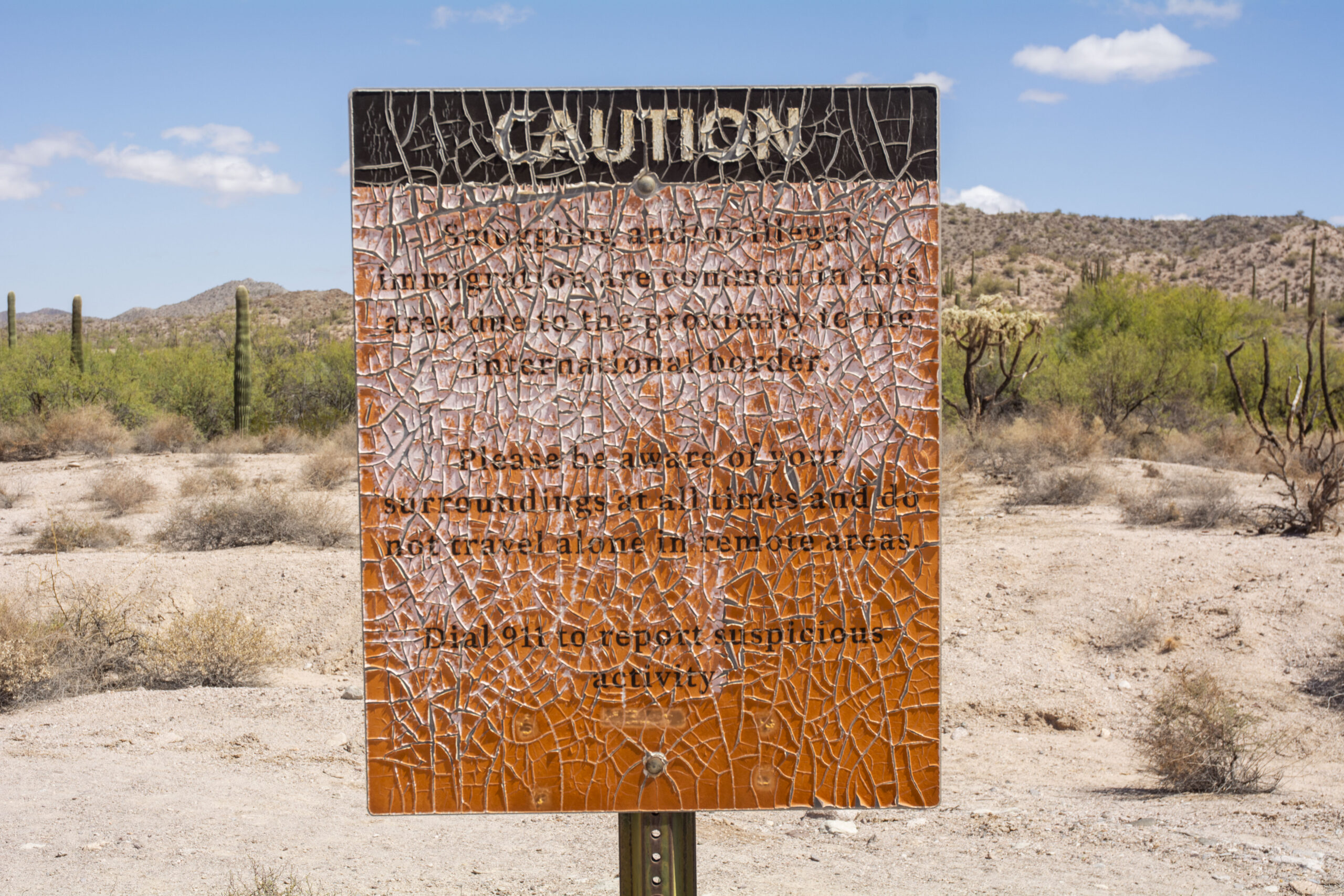
The border has long been an area where certain rights and laws are applied differently than in other areas of the country.
And that’s why Bogan and others are trying to make sure they can secure these species and sound the alarm. Beyond that, they don’t have many other options.
“We have no legal ability to stop the habitat from being destroyed. We only have the attempt in the court of public opinion and the attempt to negotiate with the Department of Homeland Security to make accommodations here, but they have no legal obligation to make accommodations or modifications to their plan,” he said.
But people are still trying.
The Tucson-based Center for Biological Diversity is suing the Trump administration to protect the Quitobaquito springsnail, saying that U.S. Fish and Wildlife Service failed to declare the tiny snail as endangered, violating the Endangered Species Act and a congressionally mandated deadline.
The agency had moved to list the snail as an endangered species in 2023 after the group had petitioned it to do so as far back as 2007. Fish and Wildlife Service asked the federal government to designate an area of land that includes part of Quitobaquito as a critical habitat for the species.
“It relies on a single spring system, so if the waters of Quitobaquito fail, the species disappears from the planet,” Russ McSpadden, southwest conservation advocate for the Center for Biological Diversity, told the Mirror.
McSpadden said that their concerns focus on how construction could impact the groundwater that fuels the springs. And that groundwater is already at risk due to the increased impact on the region from climate change.
“It would be very easy for a contractor to punch a hole to make it so the springs stop flowing,” McSpadden said.
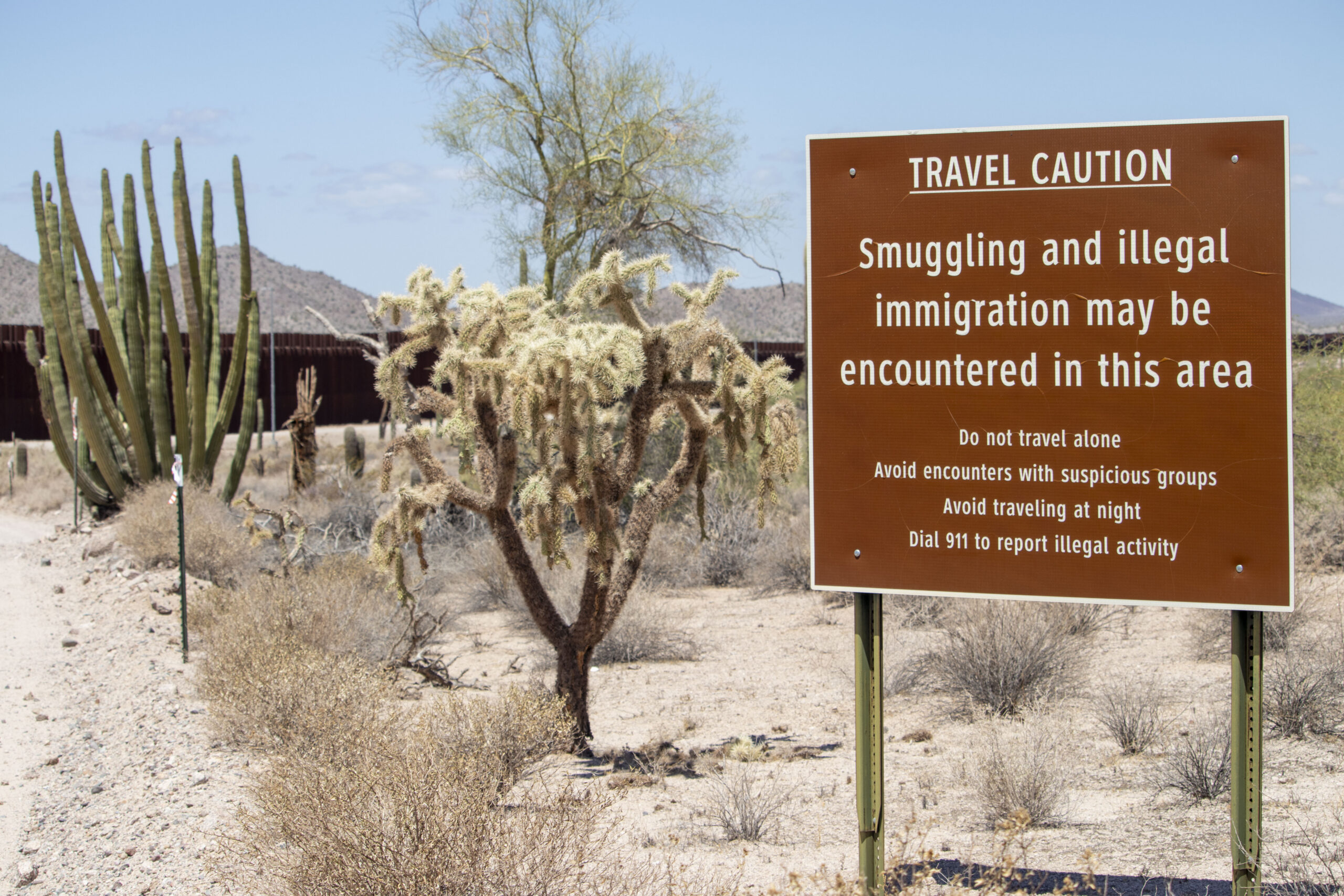
Fish and Wildlife did not respond to a request for comment for this story.
But even McSpadden admits that adding the springsnail to the endangered species list may not protect it.
“Even listing isn’t a foolproof way to protect species like the Quitobaquito springsnail from extinction, especially when it comes to the border wall. What’s the ultimate answer? I don’t know,” McSpadden said. “I wish I could say I had good news, but Quitobaquito is really in the crosshairs, and in some ways there are very few levers outside of the federal government… The decision is certainly in their hands.”
U.S. Customs and Border Protection said in a statement to the Mirror that it is working with Fish and Wildlife, as well as the National Park Service, to “avoid Quitobaquito Springs and minimize impacts to sensitive resources.”
“No groundwater will be used within five miles of Quitobaquito Springs for border wall construction, and water levels are monitored to identify any significant changes,” the statement went on to say. “CBP will implement mitigation strategies as needed.”
The Arizona Game and Fish Department also said it is working closely with the National Park Service and U.S. Fish and Wildlife to ensure the springs remain but noted their limited role.
“As a state agency, the Department has a limited role in federal initiatives, but our specialists are continuing to monitor species’ populations at the site, create mitigation strategies and have established refuge populations for vulnerable species with local partners in line with the Department’s mission and mandate,” the statement said.
Even with those assurances, people like McSpadden and Bogan remain cautious.
“Even if there are decisions made by DHS to say, ‘Oh, yeah, we are going to protect this thing over here,’ when the contractors get on the ground there may or may not be the communication on the ground to make those preservation decisions,” Bogan said.
Such was the case with the geoglyph, McSpadden noted.
But at the end of the day, nature doesn’t care about international boundaries.
“Ecosystems don’t function on international boundaries. So, how do you work with politics and nation states and ecosystems that expand well beyond those boundaries? It is a really complicated issue,” McSpadden said. “Big picture, I don’t know what happens from here, but I think it is going to be a long struggle to find what that balance is going to be to figure out how to protect ecosystems.”