Q&A: Ben Durheim on understanding rural places, local symbols, and the rural-urban divide
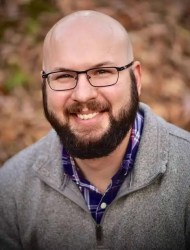
Ben Durheim is convinced that we can bridge the rural-urban divide. The problem, Durheim thinks, is that within the public sphere, there is a faulty belief that rural and non-rural places just need to talk more. Durheim says that many conversations between rural and urban start from a place of trying to fix each other, which leads to a failure to effectively communicate. In order for rural and non-rural places to flourish together, Durheim says that we need to understand the rural contexts and the ways rural places shape the way we speak, act, and live together.
Durheim is assistant professor of theology at the College of St. Benedict and St. John’s University in Minnesota, where he teaches courses in theology and ethics. In this Q&A, Durheim discusses his new book, Each in Our Own Language: Symbolization and Social Ethics in Rural America.
This interview has been edited for length and clarity.
Allen Stanton: What was the motivation for this particular book?
Ben Durheim: I’m deeply invested in the idea that the rural should flourish and both rural and non-rural can flourish together. I’ve gotten both tired, and a little annoyed, with the pervading discourse associated with the rural and non-rural divide. Particularly areas of discourse that tend to treat one or the other side as simply a problem to be fixed. Ideas like, “If they would just do things our way, then things would be better.”
Related: ‘One Minnesota’ vs. rural-metro divergence
There is a presumption that “If we just understood each other, things would be better.” And that seems to have gotten flattened into “If I just understand what people are saying, then I will understand what they mean and then if things go wrong, it’s their own fault.”
AS: You talk about how symbols help us understand this deeper meaning. What is a rural symbol, and how do they help us understand rural communities better?
BD: You have to be careful with that language. When people hear symbol, they tend to think something that stands for something else, right? And that’s not what I mean.
Symbol is closer to the experience of something taking hold of you; an experience that moves a person. An experience that gives insight. A perspective that may have been unexpected. So if you have a really important and long relationship – either with a friend or place or even with a particular food or something – if you try to explain that to someone, it doesn’t convey the same depth of experience as if you would introduce them to your friend, or you would bring them to that place, or if you would help them make and then eat that food.
Space brings with it a level of meaning that words can’t. Rather than the deep experience of lived rural life, we see misfires in our conversations, even when there’s the best of intentions.
AS: How do these symbols shape the identity of rural places?
BD: Every time I go to a church or to a public event or a talk, I ask folks, “What does it mean to be rural?” I’ve never had someone be confused by the question. I’ve also rarely had people be able to give an answer that holds the whole thing.
Instead, people tend to talk about experiences. The experience of being in a small town, graduating with 78 people, not having certain amenities but having other benefits. Or it means a long family history in a particular area.
That’s where symbols start to operate. Because if you change one aspect of that space, for example, a rural church closing, emotions come out, far beyond the logistics of keeping a building open or not. Because we’re talking about someone’s home, some piece of not just individual identity, but the shared identity of a community.
Many, if not most, people seem to have an operative understanding of what “rural” is. But it’s not a definition. It tends to be more like a sense, or a feeling. It’s a conglomeration of ideas or perspectives. And once we exit the conversation on definitions, we’re in a space where symbols function: particular kinds of cultural expressions.
AS: You also write that symbols can lie. What do you mean by that?
BD: Since symbols operate under language, they can also convey things that are less than true. One classic example would be the symbol of a safe, quaint, small town in which nothing bad ever happens. We know that’s simply not true. Bad things do happen in rural spaces.
The symbol of the safe, small town where everyone has got everyone’s back mediates something that is partially true. But it can also tell us something that is not true: that we are safer here than anywhere else.
Or, another example. There’s a common understanding of rural as pretty much white America. The number of non-white rural residents has been increasing steadily over the past few decades. So, when I go talk to some churches who have not offered, for example, resources for Hispanic ministry, I ask, “Have you thought about learning Spanish or offering ministry in Spanish?” More than once, I’ve gotten the response, “We don’t have a Hispanic population.” Every time I’ve gotten that answer, it’s been in a place that does have a Hispanic population.
The symbol of the German or Norwegian church that has been here for more than 100 years can mediate an untruth about the ethnic or cultural stasis of the community’s population.
AS: You argue that these symbols shape our ethics and patterns. How?
BD: One narrative that tends to come out is that when it comes to public policy, politics, and voting, is this old line that rural places have a history of voting against their interests.
It’s not clear to me that many rural spaces were consulted with regard to defining what exactly their interests are in that conversation. And that’s what I want to help make explicit. What really are the values operating here?
Ethics is not about just what’s right or wrong – though that’s certainly there – but it’s also about what is worthy, what is worth investment, what is worth time and energy and toil and hurt. So, symbols help complete that picture.
Related: Minnesota’s legislative session left Greater Minnesota healthcare systems exposed
An example would be local stability. Stability is not something that often shows up in an ethics textbook. But in many rural places, local stability is a cornerstone of what it is to be part of this space. To recognize the businesses, schools, and institutions that have been stable for a long time. That becomes really important to both the individual identity and that community’s identity.
What does that rural space value? You do actually have to reckon with that if you’re going to both understand and work with a rural community.
This story was originally published in the Daily Yonder. For more rural reporting and small-town stories visit dailyyonder.com.
The post Q&A: Ben Durheim on understanding rural places, local symbols, and the rural-urban divide appeared first on MinnPost.