In Laredo’s Last Stand Against Trump’s Border Wall, Are City Leaders Making a Deal with the Devil?
Early this year, a delegation of officials from the City of Laredo traveled to Washington, D.C., to meet with federal representatives about the Trump administration’s plans to completely wall off the Texans’ border community from the Rio Grande. The Laredoans returned using language that dismayed opponents of the president’s beloved border barrier. When City Manager Joseph Neeb briefed local elected officials after the Washington meetings, he cautioned them that opposing the wall altogether was “not the argument that we’re going to actually win with this administration.”
U.S. Customs and Border Protection (CBP) says it plans to build “panels,” a term that could mean the 30-foot-tall steel fencing seen elsewhere on the U.S.-Mexico border, along all of the 40-mile stretch of the Rio Grande that passes through Laredo, one of the state’s major border cities and often the busiest commercial port in the country. This is a fate that Laredo has faced—and escaped—before.
In total, the federal government has built about 140 miles of border wall in Texas over the past two decades, most of it in the Rio Grande Valley or out near El Paso. During the Biden administration, the State of Texas tried its hand at wall-building and added around 80 more miles, some of this being in rural Webb County around Laredo. But in Laredo itself, local officials and activists have fended off essentially all border barrier, save for a stretch of less-obtrusive wrought-iron fencing around a Laredo College campus.
Now, the border town of 250,000 has its back against the wall like never before, and some think it’s already too late.
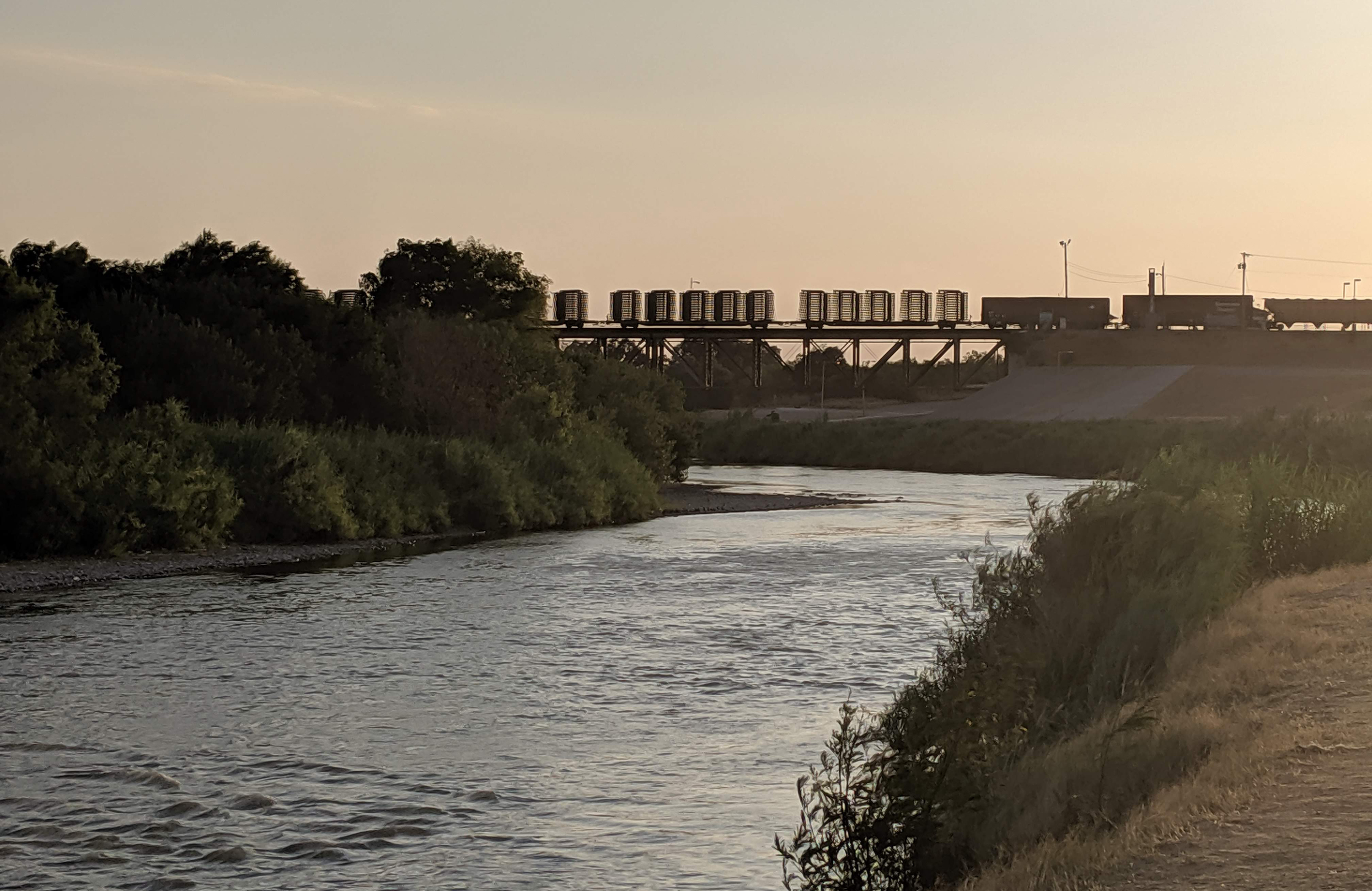
Last year, the Trump administration got $46.5 billion from Congress to build hundreds of miles of “smart wall” along the state’s 1,200-mile border, including 100 miles through CBP’s Laredo Sector, which includes Webb and Zapata counties. Smart wall is a vague term that means some combination of physical barriers, surveillance equipment, lighting, and roadways. In much of the Laredo Sector, the barrier’s full footprint will be 250 feet wide, including maintenance and access roads on both sides of the bollard panels. According to an online map published by CBP, only a short stretch of this sector, along Falcon Lake, will be spared the steel wall.
Raising the stakes even higher is CBP’s plan to string dangerous river buoys the length of the Rio Grande. Laredo, a historic town founded in 1755 that boasts a picturesque central plaza, draws all its drinking water from the river, and officials are concerned the buoys could cause silt to build up in front of the city’s intakes.
But local officials, namely Neeb and Mayor Victor Treviño, who took office in 2022, have now taken the position that past opposition tactics won’t work again. “We understand that the presidential mandates have eminent domain,” Treviño told the Texas Observer in May. “So if you say ‘no,’ they’ll do condemnation. But what’s the other choice? We still have the choice of dialoguing, talking about what makes sense and what’s the reality, versus saying no and then we get condemnation.”
As of early June, the second Trump administration had only filed about 30 condemnation lawsuits for the border wall in the Southern District of Texas, with all of those being downriver of Laredo in Starr or Hidalgo counties.
Treviño and Neeb have said they’re negotiating with CBP—the city itself owns 14 riverfront miles—to protect five public parks, four international bridges, two water treatment plants, and one wastewater plant. It’s better to sit at the table with the Trump administration, they say, than risk the feds running roughshod over them. That hasn’t sat well with wall opponents.
“The city government wanted to negotiate with [CBP],” said Ricardo De Anda, an attorney who owns riverfront property on Laredo’s outskirts. “Create a carveout here, a carveout here. ‘We won’t put a wall on this park. We’ll agree to put it here, but we won’t put it there.’ The feds are saying, ‘Hey, we’re not the ogres they’re putting us out to be. We let them have this park.’ … It’s important that we stop the city from entering into an agreement to let the feds build the wall.”
Neeb and Treviño’s critics note that, far upriver in West Texas, a coalition of conservative and liberal wall opponents, including local officials, has seen success by banding together to fight construction on ranchland and public recreation areas. The opponents say the city is caving to the Trump administration, and the consequences will be a needless eyesore that divides the town from its sister city of Nuevo Laredo, cuts residents off from their river, damages a unique border ecosystem, and despoils the city center.
And a fluvial geomorphologist’s recent study, which determined that building a barrier along the Rio Grande would likely cause deadly flooding, has breathed new life into these critics’ efforts to protect Laredo.
But the wall opponents have a tough fight ahead of them. Along with the power of eminent domain and an unprecedented level of funding, Trump’s Department of Homeland Security has waived nearly 30 environmental, procurement, and other laws that might have slowed construction, and the president still has two-and-a-half years left in his term. The city also has to contend with Governor Greg Abbott, who’s shown he’s willing to use government resources against local officials who don’t fall in line with his and Trump’s agenda.
When news broke earlier this year that CBP planned to build Trump’s wall through the Big Bend region, including its iconic state and national parks, a bipartisan outcry arose over the risk it posed to the remote, ecologically diverse region.
The national park is one of the state’s greatest natural treasures, and the Chihuahua Desert, with its “sky island” mountain ranges creating unique pop-op ecosystems, has devoted admirers across the country. It’s also a location where a 30-foot fence would be particularly absurd: At places, the Rio Grande cuts through rugged canyons, while an even bigger deterrent is the Sierra Del Carmen, a mountain range in northern Mexico that cuts the border off from that country’s interior. The arid Chihuahua desert deters immigrants on the U.S. side.
Even elected Republicans in Texas, who usually fall over themselves to kneel before Trump, have pushed back. Among them are legislators and Hudspeth County Sheriff Arvin West, a conservative border security hawk who’s turned alarmist rhetoric about immigration into Fox News appearances and grant money but in March joined other West Texas officials in opposing the wall through their part of the state.
“Border security is not a one-size-fits-all proposition,” a letter that West and four other sheriffs signed states. “Strategies that may be appropriate in high-traffic urban sectors are not necessarily appropriate in geographically remote regions such as ours. Sound policy must be informed by local terrain, operational realities and fiscal responsibility.”
Following the outcry, CBP has said it’s reconsidering its construction plans in Big Bend National Park. As of early June, the CBP online map shows plans to deploy only technology, roads, or vehicle barriers through most of the park—though constantly shifting statements and contradictory contract language have left residents still scrambling to understand the agency’s plans for the area.
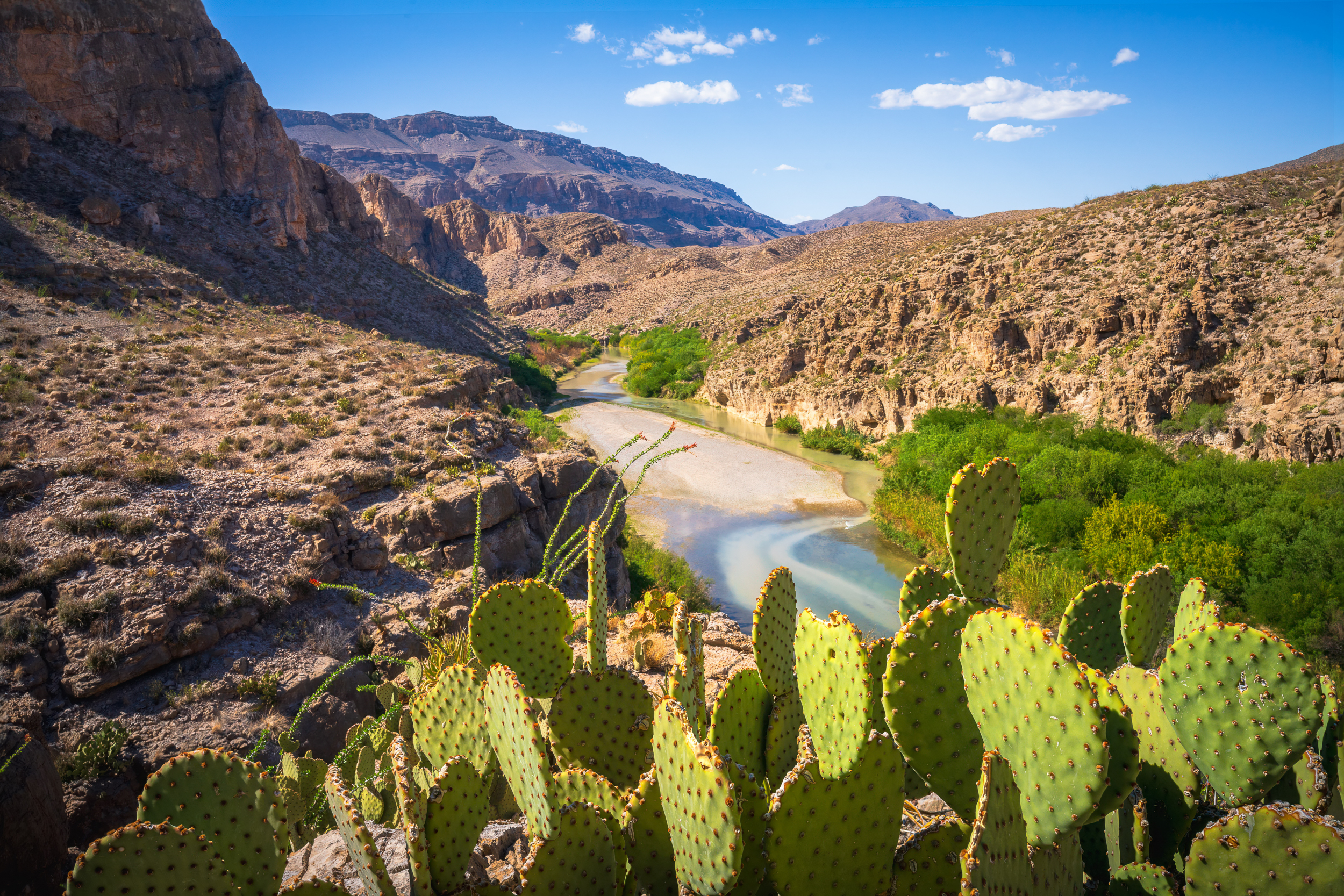
Seeing the united front in West Texas has galled Laredo wall opponents, whose home faces a similarly existential economic and cultural threat, they believe. Their region, which can’t claim the same menacing topography as Big Bend but does host a deep river and some bluffs, also sees fewer illegal crossings than other parts of the border. Yet their city is willing to sit down at the table with CBP and trade horses (the municipal government has already agreed to surveying and soil samples on land it owns).
CBP has said it will begin construction in September on a stretch of border that runs from downtown Laredo south into Zapata County. Construction activities have already begun in southern Zapata County, near the community of San Ygnacio—home to historic buildings from an early 19th-century settlement—where activists are embroiled in a dispute with CBP about whether bulldozers are on land belonging to the federal government or to the county and private owners. Laredo’s political clout and resources could help private landowners fight back, activists told the Observer.
During the first Trump administration, the city government officially sat out the legal fight against Trump’s wall. But, with a native son, Henry Cuellar, in the U.S. House on the powerful Appropriations Committee, Congress restricted border wall funding to other regions until fiscal year 2020. At that point, activists and landowners launched efforts to gum up the works.
In 2020, Zapata County and now-Laredo City Councilmember Melissa Cigarroa filed a lawsuit challenging the waiver of environmental and other laws by the first Trump administration. A Laredo judge signaled she agreed with courts that had ruled that Chad Wolf, the man Trump had named acting Homeland Security secretary, was improperly appointed. After taking office, President Joe Biden halted wall construction in the Laredo area and rescinded the waivers.
But while both Neeb and Treviño agree with their predecessors that they don’t want a wall cutting through their city, they also take the position that there’s no pathway to victory if they fight. The Trump administration has too many advantages this time.
“Fight on what reality?” Neeb asked in an interview. “If Laredo is going to fight this in court, we want a chance to win.” The city’s best option, Neeb and Treviño argue, is to try to satisfy CBP while protecting as much as possible.
They’re asking CBP to narrow the wall’s footprint in some places to avoid running over parkland and a municipal golf course and to ensure access to the water treatment and wastewater plants, which in some cases officials also want room to expand. “We have to find a way to not conflict with [their] mission,” Neeb said.
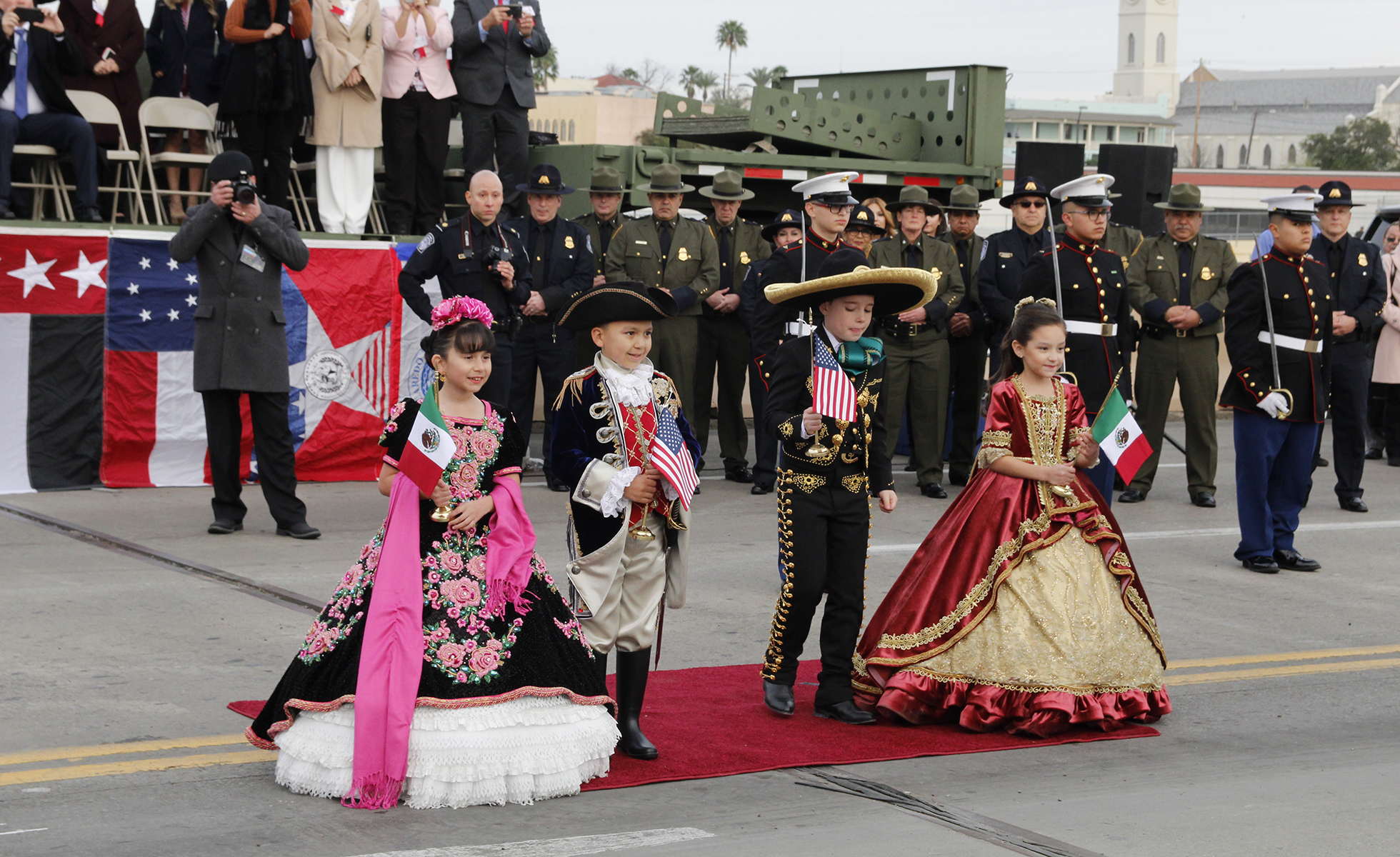
Meanwhile, Cuellar may not be as effective of a champion in D.C. as he was. Trump pardoned Cuellar, who’d been indicted on corruption charges, last year, then criticized him for not switching parties; in January, the Justice Department charged the congressman’s brother, Sheriff Martin Cuellar, with misappropriating government funds.
Cuellar didn’t answer questions for this story, but his office provided the Observer a written statement: “Border crossings have declined without a single mile of additional border wall construction. As Ranking Member of the House Appropriations Subcommittee on Homeland Security, I have worked to protect the local community including wildlife refuges, historic cemeteries, and other important sites from border wall construction through the appropriations process, while pursuing additional protections for areas of local concern. I will continue working to protect South Texas, and I believe in strong, common-sense border security.”
Protections for wildlife refuges and other sites were not included in last year’s wall funding bill, and CBP has awarded a contract to build through previously protected sites in the Valley. Earlier this month, Cuellar tried unsuccessfully to amend legislation to explicitly shield some places in Texas, including Laredo’s city parks and water facilities and Big Bend National Park.
Today’s border wall opponents also risk retaliation from a vindictive state government run by Trump allies; last year, Texas officials ordered Laredo to pave over an anti-wall message on a downtown street or lose transportation funds. (Mayor Treviño told the Observer: “We did that upon our choice. We decided that was something that was a voice of an activist group, but I guess the majority of the people here know that we need to have federal and state help.”)
At an April news conference, city officials announced what they consider fruits of their more realistic approach, saying that CBP had shared detailed wall plans, and those plans showed the barrier won’t run through the Max Mandel Golf Course or the city’s water treatment plants.
At the news conference, Neeb and Treviño presented renderings of a less obtrusive wall CBP had proposed for Laredo’s downtown.
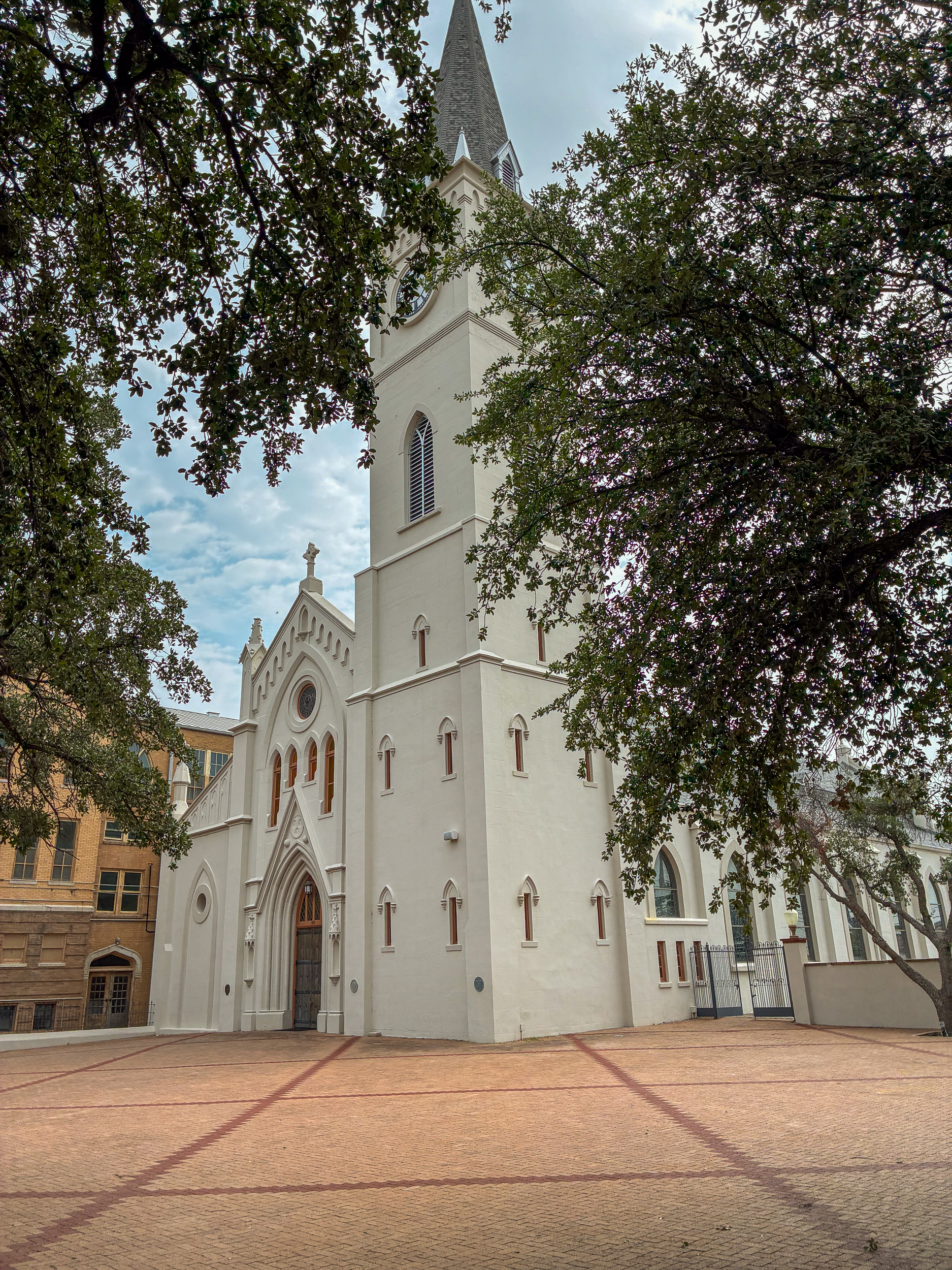
Sitting on bluffs overlooking the river vega, or floodplain, Laredo’s city center hosts the historic 19th-century San Agustín Cathedral on the plaza of the same name, while below the bluffs two bridges handle personal vehicles and pedestrian traffic alongside a city park with a basketball court, picnic tables, and grills. A 30-foot wall here has always been a nightmare to locals.
The renderings Neeb and Treviño displayed at the news conference showed, instead, a berm several feet high with a variety of shorter, less brutalist fences on top of them. (In the past, CBP considered a “bulkhead” concrete wall on the river’s edge that would have doubled as a sort of promenade, but officials say they’ve now discarded that idea.) “These are results, and they represent a process grounded in facts, experience, and good faith,” Treviño said at the time.
The plans are not yet set in stone, though. In a statement to the Observer, CBP said, “The design for the border wall in the downtown area of Laredo has not been finalized.”
According to Neeb, he’s been obligated to become something of a CBP whisperer. “I spend a lot of time trying to determine what is it that they truly need, as far as in their minds, what do they call mission critical?” Neeb said in an interview. “And if I can talk on their level, we can interject what we’re asking for as a community within that. And I’ve not had a ‘no’ out of them yet on any of these conversations.”
But wall opponents note the city is trying to negotiate with an administration notorious for bullying and bad faith.
Laredo isn’t as widely known as the Big Bend for its history and natural beauty, but it’s one of the oldest cities in Texas, and the Rio Grande as it winds through South Texas is unlike anywhere else in the state.
The Tamaulipan thornscrub gently slopes down to impressive bluffs that overlook a slow-moving, tree-shaded river that could be in the tropics. After recent rains in May, the Las Palmas nature preserve, near where the Zacate Creek tumbles over a limestone shelf creating a small waterfall before trickling into the Rio Grande, was verdant. Towering Washingtonia palms created a tropical grove boasting pops of color. There were yellow sunflower blooms and retama blossoms. Pink coral vines. White petals were beginning to appear on a Texas olive.
This is an area that has, in the past, seen smuggling, but on a recent weekday Border Patrol vehicles with their thick green stripes and rented trucks containing uniformed National Guard troops were plenty visible.
As recently as last year, the Rio Grande International Study Center, a nonprofit dedicated to protecting and studying the river, had a working relationship with local CBP officials, said Martin Castro, the organization’s watershed science director. The center was working with volunteer groups to remove invasive carrizo cane and a species of salt cedar native to Africa and the Middle East. As it turned out, this was good news for the Border Patrol agents surveilling that part of the river; removing the vegetation improved their line of sight and ability to move through the vega. National Guard soldiers deployed to the border by Trump began joining the volunteers in removing the invasive vegetation. Then, in the fall, the troops stopped working with the nonprofit, and CBP became less communicative. Around that time, Castro said, Laredoans learned the wall was slated to cut through the park.
“This is a beautiful habitat for native plants and for migratory corridors for birds from Central and South America,” he said. “We have the wall just kind of looming over all this though, like a dark cloud.”
Las Palmas sits below Laredo’s historic Azteca residential neighborhood and between its downtown and the wastewater plant, all in the path of the wall project that CBP says will break ground in September. Neeb says this is an area the city wants to protect, but Castro said any kind of barrier running through it is likely to disrupt the delicate riparian ecosystem.
Between Las Palmas and the Rio Grande, the Border Patrol maintains a caliche road that runs the length of Laredo. Cyclists can use it to reach parks the city government owns on the river. This is also at risk.
“We don’t know where the wall would be,” said David Patricio, who regularly rides along the river with friends. “All of a sudden, maybe you just can’t ride your trail that we’ve been riding for years.”
Like the Big Bend, Laredo has built a broad coalition of wall opponents. Among them is Dennis Nixon, the CEO of the International Bank of Commerce and one of Trump’s biggest fundraisers. Nixon regularly puts out a white paper titled Common Sense Border Management Solutions, outlining his proposals for securing the southern border. The latest update, from 2024, largely tracks what were once mainstream Republican positions, along with a few that align with the Rio Grande International Study Center: strong interior immigration enforcement, updating immigration laws to meet U.S. labor needs, removing invasive plants along the river, and creating a network of parks on both sides of the border. “Despite our vast investments in constructing the wall, we have seen few results,” Nixon wrote.
But Laredo has received sparse national attention compared to the Big Bend.
“A lot of the same arguments for why you wouldn’t build it in Big Bend are the exact same arguments for why you wouldn’t build it in Laredo,” said Carlos Flores, a local attorney who fought the wall during the first Trump administration. “Laredo is a historically relevant community, no question. … People from all over the world come to South Texas in deer hunting season, because they want to enjoy that experience of hunting in the brush country, cold mornings up in the deer blind, waiting for a 12-point buck to appear in the sendero. That is a magical South Texas experience.”
In a brief interview in May, Mayor Treviño, who’s helped lead the efforts to accommodate CBP, stood with the common local view that the city does not actually need a wall.
“We’re one of the lowest, if not the lowest, illegal crossing sites in the southern border,” he said. “We’re one of the safest cities in the whole country. So logically speaking, you don’t need the border wall.”
Treviño said he does support additional agents on the ground. Neeb noted that they’re good for the region’s economy. But in the city council meeting early this year after visiting Washington, Neeb also warned elected officials that CBP is arguing that building a wall is less costly than paying for personnel.
Now, Treviño is preparing for reelection at an odd time in Laredo politics. In 2024, Trump won Webb County, traditionally a Democratic stronghold. But Democrats handily won down-ballot races. More than six times as many Democrats as Republicans voted in the March primary election—while Dems here and elsewhere show signs of highly motivated opposition to Trump.
And a report this year by geomorphologist Richard Tompkins has created a new sense of urgency among wall opponents. Tompkins’ report warns that when the Rio Grande floods, debris will clog the space between the wall’s steel bollards and make the fence impermeable. That will “straight-jacket” the river, increasing depth and speed until eventually a portion of the wall gives way—allowing “concentrated flooding” into residential areas of Laredo, “posing a threat to human life” and to property.
“This is a question of public safety,” said Councilwoman Cigarroa, who also owns land on the Rio Grande in Zapata County. “Our request to the federal government is to get the public data, and do the studies we need. If they won’t, we need to know what those risks are, so our city can plan to protect our neighborhoods and our people. Really, the biggest priority is the loss of human life.”
CBP didn’t respond to the Observer’s questions about Tompkins’ report, but a letter Cuellar wrote to city officials included a response from the agency: CBP “does not agree” with the report, the agency wrote.
“When constructing a border wall in an area identified as a flood plain, CBP conducts a hydraulic and hydrologic (H&H) analysis of the planned barrier alignment and consults with the U.S. International Boundary and Water Commission (USIBWC) to ensure construction does not alter the natural flow of the Rio Grande River or increase significantly flood waters into Mexico in accordance with treaties with Mexico,” CBP stated.
Get the newsletter

In May, border wall opponents convinced the city council to conduct its own study. Laredo’s municipal government is in the process of hiring a consultant. It won’t be finished before projected wall construction is underway, however.
Mariana Salinas told the Observer she raised her children, now grown, in the Azteca neighborhood, where her husband’s family has lived for generations. The family once regularly fished in the river, and when the Rio Grande International Study Center began working with residents along Zacate Creek on beautification projects—part of a decades-long effort to de-pollute and improve this stretch of the river—Salinas joined in. She’s now a staunch border wall opponent.
“The nature is very beautiful,” she said of the greenway in the floodplain below her neighborhood. “And that they’re going to destroy it, well, the river has existed for ages. It’s the source of water and everything else, and that it can end moment to moment is very sad.”
Spending so many years along the Rio Grande, Salinas has seen how dangerous it can be. In 2010, Azteca was evacuated when the river spilled over its banks. “The wall will be right there,” she said. “The water won’t flow the way it flows right now. It will rise and flood the homes above.”
The post In Laredo’s Last Stand Against Trump’s Border Wall, Are City Leaders Making a Deal with the Devil? appeared first on The Texas Observer.